If you already have paint protection film on your car, you might be wondering whether ceramic coating over PPF is worth doing as well. The short answer is yes, in many cases it can be a smart combination. PPF and ceramic coating do different jobs, so layering them properly can give Melbourne car owners better day-to-day protection, easier washing and a cleaner finish without replacing the role of the film itself.
The key is understanding what each product does, where they overlap and where they do not. Once you know that, it becomes much easier to decide whether this approach suits your car, your budget and how you use the vehicle.
What PPF and ceramic coating each do
Before deciding on ceramic coating over PPF, it helps to separate the purpose of each system.
Paint protection film is a physical layer applied over painted surfaces. Its main job is to absorb impact from common road hazards such as stone chips, light scratches, bug splatter and road debris. On high-risk areas like bonnets, front bars, guards and mirrors, that physical barrier can make a real difference.
Ceramic coating for cars works differently. It is not a thick impact barrier. Instead, it forms a protective surface layer that helps resist contamination, improves water beading and makes regular cleaning easier. It can also help maintain a glossier, freshly detailed look for longer.
Put simply:
- PPF protects against impact and abrasion
- Ceramic coating protects against grime, water spotting and cleaning-related wear
That is why the two products are often paired rather than treated as either-or options.
Ceramic coating over PPF: when it makes sense
Yes, you can apply ceramic coating over PPF, and in many cases it is a practical upgrade. A quality coating can bond to the surface of the film and add benefits that PPF on its own does not fully provide.
This setup often makes sense if you:
- Want your wrapped panels to be easier to wash and dry
- Would like better water beading on the film surface
- Drive regularly in Melbourne traffic and want less grime clinging to the car
- Have a dark-coloured vehicle that shows marks, dust and water spots quickly
- Want a more consistent finish across filmed and non-filmed panels
For example, if your front end has PPF but the rest of the vehicle has exposed paint, adding ceramic coating can help create a more uniform look and maintenance routine. Instead of treating each surface completely differently, you get a car that is simpler to care for week to week.
It is also useful for owners who keep their cars for several years. Less contamination sticking to the surface can mean less aggressive washing and less effort over time.
What ceramic coating over PPF can and cannot do
This is where many people get confused. Ceramic coating over PPF can improve the performance of the film in some ways, but it does not turn it into something it is not.
What it can do
- Help water roll off more easily
- Reduce the build-up of dirt, bird droppings and bug residue
- Make washing faster and less labour-intensive
- Improve surface slickness and appearance
- Support easier maintenance on gloss or satin film, depending on the product used
What it cannot do
- Stop major impact damage
- Replace the self-healing properties of certain premium films
- Prevent every stain or water spot
- Fix poor-quality or ageing PPF
- Eliminate the need for correct washing techniques
That last point matters. Some car owners assume that once the car is coated, they can be less careful. In reality, even with ceramic coating over PPF, poor washing habits can still mark the surface or shorten the life of the protection system.
A professional installer should also match the coating to the surface. Some coatings are designed specifically for film and vinyl, while others are more suitable for painted surfaces. Using the right product helps preserve the appearance and performance of the PPF rather than compromising it.
Preparation matters more than most people think
Whether this combination works well often comes down to preparation. Applying a coating over film is not just a matter of wiping a product on and hoping for the best.
The PPF surface needs to be clean, stable and ready to accept the coating. If the film has just been installed, there is often a curing period before any coating should be applied. The exact timing can vary depending on the film, adhesive system and installation conditions.
Before coating, a professional detailer will usually assess:
- The age and condition of the PPF
- Whether the film has fully settled and cured
- Any contamination, residue or edge build-up
- The finish type, such as gloss, matte or satin
- Whether all panels should be coated for a consistent result
If the film is already stained, lifting at edges or showing wear, coating over it may not be the best first step. In those cases, it is better to sort out the underlying issue before sealing it in.
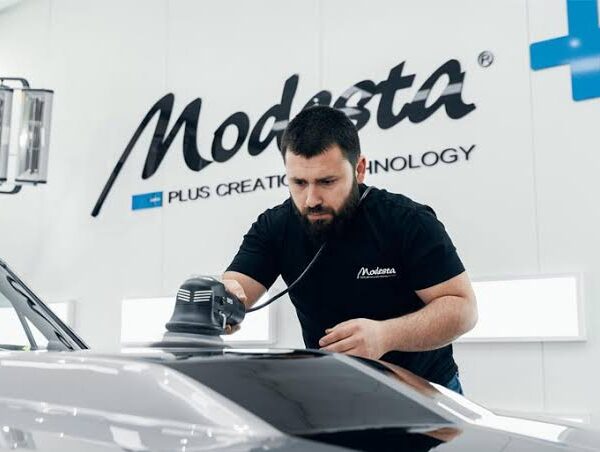
This is one reason professional installation matters. A proper process helps avoid patchy bonding, uneven finish or disappointment later. If you are considering a premium protective system, it is worth looking at options such as Modesta paint protection coating where product choice and application method are part of the overall result.
Is it better to coat the whole car, or just the PPF?
There is no single answer for every vehicle. It depends on how much of the car is covered in film and what outcome you want.
Coating just the PPF-covered areas
This can be a good option if your main goal is easier maintenance on those high-contact front-end panels. It may suit owners who have partial PPF coverage and want to improve how that section performs in daily use.
Coating the entire vehicle
This is often the more seamless approach. If some panels have PPF and others do not, coating the full exterior can deliver:
- More even gloss and water behaviour
- Simpler maintenance across all surfaces
- Better protection against contamination on exposed paint
- A more consistent finish overall
For Melbourne drivers dealing with mixed weather, freeway driving and urban grime, an integrated protection plan usually makes ownership easier. Your maintenance routine becomes more straightforward, and the car tends to stay cleaner between washes.
If you are weighing up different options, the best approach is to think about how the car is actually used. A weekend car stored indoors may need something different from a daily driver parked outside under trees and used on the Monash every day.
How to maintain ceramic coating over PPF properly
Once ceramic coating over PPF has been applied, maintenance is still important. The good news is that upkeep is usually easier than with untreated surfaces, provided you stick to sensible washing methods.
A few practical tips:
- Wash the car regularly so contaminants do not sit on the surface too long
- Use pH-friendly car wash products rather than harsh household cleaners
- Rinse bird droppings, bug splatter and tree sap off as soon as possible
- Use clean wash media to reduce the risk of marring
- Dry the vehicle properly to minimise water spotting
- Book periodic maintenance inspections if recommended by your detailer
Melbourne conditions can be tough on exterior surfaces. Hard water, coastal air in some suburbs, long summer heat and winter grime can all affect how clean a car stays. A coated PPF surface can help, but it still benefits from regular attention.
If your car has both film and coating, avoid assuming every off-the-shelf detailing spray is suitable. Some products can leave residue, affect the look of matte film or simply not add any real value. Keeping the maintenance plan simple is often the best path.
For owners who want the best result long term, professional advice is worth it. The right combination of paint protection film and coating should be based on the car, the finish and the way you drive, not a one-size-fits-all package.
So, is ceramic coating over PPF worth it?
For many car owners, yes. Ceramic coating over PPF can be a worthwhile upgrade because it complements the film rather than competing with it. PPF gives you the physical barrier. Ceramic coating adds easier cleaning, improved water behaviour and a finish that is simpler to maintain.
It is not magic, and it is not necessary for every vehicle. But if you want your protection system to be easier to live with day to day, it can be a very sensible addition.
The most important part is getting the timing, preparation and product choice right. When those pieces come together, combining both systems can deliver a cleaner-looking car with practical benefits you notice every week, not just on delivery day.
Frequently asked questions
Can ceramic coating damage PPF?
When the correct product is used and applied properly, ceramic coating should not damage quality PPF. Problems are more likely if the film is poor quality, not fully cured or the wrong coating is used for the surface.
How long should I wait before applying ceramic coating over new PPF?
The wait time depends on the film and installation conditions. Many vehicles need a curing period before coating is applied. It is best to follow the installer’s advice rather than rushing the process.
Does ceramic coating over PPF stop stone chips completely?
No. The stone-chip protection comes mainly from the PPF itself. Ceramic coating adds surface benefits like easier cleaning and water beading, but it does not replace the impact protection of the film.